
Chipped Tooth Repair: Can a Broken Tooth Be Fixed or Replaced?
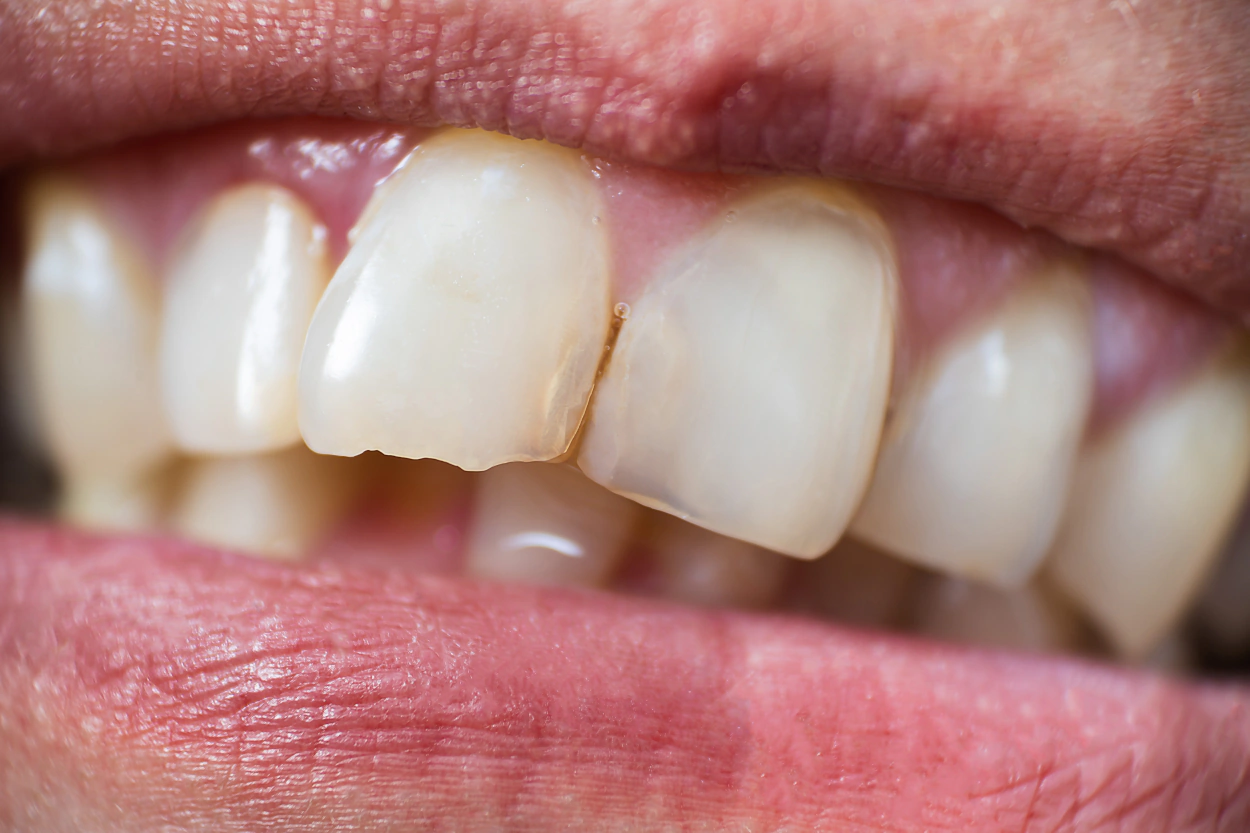
Chipped or Broken Tooth? You May Have a Dental Emergency
A chipped or broken tooth can happen without warning. Whether you've bitten down on something hard, suffered a fall, or experienced an injury to your mouth, the damage can be painful and frightening. You may be wondering whether your tooth can be saved, how quickly you need to see a dentist, or whether the entire tooth will need to be replaced.
Not every chipped tooth is a dental emergency, but some broken teeth require urgent treatment. If you're experiencing significant pain, bleeding, swelling, or sensitivity after breaking a tooth, contact a dentist as soon as possible. Even if the tooth doesn't hurt, it's important to have the damage evaluated before it becomes a more serious problem.
At First Dental Center in Tucson, we evaluate chipped and broken teeth to determine the most appropriate treatment. Depending on the extent of the damage, your options may include dental bonding, dental crowns, or, in more serious cases, tooth extraction and replacement with a dental implant.
The good news is that a chipped tooth doesn't necessarily need to be replaced. In many cases, your dentist can repair the damage and preserve your natural tooth.
Can a Chipped Tooth Be Repaired?
Most chipped teeth can be repaired, particularly when the damage is limited to the enamel, the hard outer layer of the tooth.
The appropriate treatment depends on several factors, including the size and location of the chip, whether the tooth is painful, and how much healthy tooth structure remains.
A small chip on a front tooth may only require a cosmetic repair. A broken molar that has lost a substantial portion of its chewing surface may need a dental crown. If the fracture extends into the root or the tooth cannot be restored, extraction may be necessary.
The important thing is to have the tooth examined before the damage gets worse. Even a relatively small fracture can expose vulnerable areas of the tooth or create a place where bacteria can accumulate.
Dental Bonding for Small Chips
Dental bonding is one of the simplest ways to repair a minor chip, particularly on a front tooth.
During the procedure, your dentist applies a tooth-colored composite resin to the damaged area. The material is shaped to match the natural contours of your tooth and hardened using a special curing light.
Bonding is often completed in a single appointment and usually requires little or no removal of healthy tooth structure.
It's a particularly useful option for small chips, uneven tooth edges, and minor cosmetic imperfections. However, bonding material can stain or wear over time, and larger repairs may not withstand heavy biting forces as well as a crown.
Dental Crowns for Larger Chips and Broken Teeth
When a substantial portion of a tooth has broken away, a dental crown may provide the protection and strength needed to restore it.
A crown covers the remaining visible portion of the tooth, restoring its shape, appearance, and chewing function. Crowns are commonly recommended when there isn't enough healthy tooth structure left for a predictable bonding repair.
For example, a molar that breaks while chewing may need a crown if one of its cusps fractures. A front tooth with extensive damage may also benefit from a crown, particularly if the tooth has previously undergone root canal treatment.
If the inner pulp of the tooth has been damaged or infected, root canal treatment may be necessary before placing the crown.
A dental crown can often save a badly broken tooth that might otherwise continue to deteriorate. However, the tooth must have enough healthy structure remaining to support the restoration. A crown cannot repair every fracture, particularly one that extends deep into the root.
The goal is to preserve as much of your natural tooth as possible while providing a durable restoration.


I had a really good experience at this dental office. The dentist, who is also the owner, is very knowledgeable, friendly, and accommodating. I can tell that she is a... read more

 Fern Bantoto
September 1, 2026
They are all so wonderful and great people to be around with.
 Carlos Romero
August 31, 2026
Great service
 Mark Wolfel
August 18, 2026
Can a Broken Tooth Be Saved With a Crown?
Many patients assume that a tooth with a large chip or fracture needs to be extracted. Fortunately, that isn't always the case.
A dental crown may be able to restore a tooth even when a significant portion of its visible structure has broken away. The dentist first evaluates the remaining tooth, its roots, and the surrounding bone to determine whether the tooth can support a restoration.
If the damage is limited to the upper portion of the tooth and the root remains healthy, a crown may provide years of reliable function with proper care.
However, if the tooth is fractured below the gumline, has a vertical root fracture, or has lost too much supporting structure, placing a crown may not be a predictable long-term solution.
Saving your natural tooth is generally preferable when it can be restored successfully. An examination and dental X-rays can help determine whether a crown is appropriate or whether another treatment is necessary.
When Is a Dental Implant Necessary for a Broken Tooth?
Sometimes a tooth is too severely damaged to repair, even with a crown.
A fracture extending deep into the root, extensive decay, or damage to the supporting structures may make extraction the most appropriate treatment.
When a tooth cannot be saved, a dental implant may offer a long-term replacement option.
A dental implant uses a small titanium post placed into the jawbone to support a replacement tooth. After the implant integrates with the surrounding bone, a custom dental crown is attached to restore the appearance and function of the missing tooth.
Unlike a traditional dental bridge, an implant generally doesn't require altering the neighboring healthy teeth. It also helps maintain stimulation of the jawbone in the area where the natural tooth was lost.
At First Dental Center, we provide dental implants in Tucson for patients who are appropriate candidates. If your broken tooth cannot be restored, we can evaluate whether an implant would be a suitable replacement.

What Should You Do If You Chip a Tooth?
If you chip or break a tooth, try to avoid chewing on that side of your mouth until a dentist can examine it.
Rinse your mouth gently with warm water. If you find the broken piece of tooth, save it and bring it to your appointment. In some circumstances, a dentist may be able to reattach a fragment.
If the tooth has a sharp edge, temporary dental wax can help protect your tongue or cheek. A cold compress may help reduce swelling after an injury.
Avoid attempting to glue the tooth back together yourself.
Even if the tooth doesn't hurt, you should schedule a dental examination. Some fractures are more extensive than they appear, and the absence of pain doesn't necessarily mean the tooth is undamaged.
Severe pain, significant swelling, or a loose or displaced permanent tooth requires urgent dental attention. Uncontrolled bleeding, serious facial trauma, or difficulty breathing or swallowing warrants emergency medical care.
How Much Does It Cost to Repair a Chipped Tooth?
The cost of chipped tooth repair depends primarily on the treatment required.
Minor dental bonding is generally less expensive than a dental crown. A tooth that requires root canal treatment and a crown will usually cost more than one that only needs a cosmetic repair.
If the tooth cannot be saved, extraction and replacement with a dental implant introduce additional costs.
Dental insurance may cover a portion of certain restorative procedures, depending on your policy, the reason for treatment, and your plan's limitations.
Because two chipped teeth can require very different treatments, an examination is the best way to determine the appropriate procedure and obtain an accurate estimate.
Can You Leave a Chipped Tooth Untreated?
A very small chip that affects only the enamel may not require extensive treatment. Your dentist may simply smooth a rough edge or recommend monitoring the tooth.
However, larger chips can create problems if left untreated. Exposed dentin may cause sensitivity, weakened tooth structure may fracture further, and cracks can sometimes allow bacteria to reach the inner portions of the tooth.
A chipped tooth can also have sharp edges that irritate your lips, cheeks, or tongue.
Addressing the damage early may help prevent a relatively simple repair from becoming a more complicated dental problem.
Chipped or Broken Tooth? Visit First Dental Center in Tucson
Whether you've chipped a front tooth, broken a molar, or damaged an older dental restoration, the first step is determining how much of the natural tooth can be preserved.
At First Dental Center, we help patients understand their treatment options and choose an appropriate solution for their dental health, appearance, and budget. From minor bonding repairs to dental crowns and implants, our goal is to restore your smile while preserving your natural teeth whenever possible.
Our dental office is located at 1710 W. Valencia Road, Suite 190, in Tucson, just east of Mission Road. We welcome patients from southwest Tucson, Valencia West, Midvale Park, and surrounding communities.
Contact First Dental Center to schedule an examination for your chipped or broken tooth.