What If You Can't Get Dental Implants? Your Other Options
Dental implants are one of the most durable ways to replace missing teeth, but not everyone is a good candidate for implant surgery. Sometimes there isn't enough healthy bone to support an implant. Active gum disease, certain medical conditions, smoking, medications, or other factors may also make implant treatment more difficult or less predictable.
If you've been told that you can't get a dental implant, however, that doesn't necessarily mean you're out of options. It may not even mean that an implant is permanently off the table.
The first question is why you aren't currently a candidate for dental implants. From there, your dentist can determine whether the problem can be treated or whether another type of tooth replacement would be a better choice.
Why Would Someone Not Be Able to Get Dental Implants?
Dental implants need healthy bone and gum tissue for long-term support. Implant placement also involves oral surgery and a period of healing while the implant integrates with the jawbone.
There are several reasons a dentist may recommend delaying an implant or choosing another treatment.
Not Enough Jawbone
Bone loss is one of the most common obstacles to dental implant treatment.
After a tooth is lost, the jawbone in that area gradually begins to shrink because it is no longer supporting a tooth root. The longer the tooth has been missing, the more bone may be lost.
That doesn't automatically rule out an implant.
In many cases, bone grafting can rebuild or preserve enough bone to support an implant. Whether grafting is possible depends on the location and extent of the bone loss as well as your overall oral health.
Active Gum Disease
Healthy gums and supporting bone are essential for a successful dental implant.
If you have active periodontal disease, your dentist may recommend treating it before proceeding with implant surgery. Placing an implant into an unhealthy oral environment can increase the risk of complications and future bone loss around the implant.
Again, this may be a reason to postpone an implant rather than abandon the idea completely.
Smoking
Smoking can interfere with healing and increases the risk of dental implant complications.
Being a smoker doesn't automatically mean that implants are impossible, but it can make treatment less predictable. Your dentist may recommend quitting before implant surgery and remaining smoke-free during healing.
Medical Conditions or Medications
Certain health conditions and medications can affect healing, bone metabolism, or the safety of oral surgery.
Having a medical condition doesn't necessarily disqualify you from receiving an implant. The important question is whether the condition is well controlled and whether implant treatment can be performed safely.
Your dentist may need to coordinate with your physician before deciding whether an implant is appropriate.
Implant Surgery Isn't the Right Choice for You
Sometimes the issue isn't whether an implant is technically possible.
A patient may prefer to avoid surgery, may not want to undergo bone grafting or a lengthy treatment process, or may simply decide that another tooth replacement makes more sense for their circumstances.
That's a perfectly legitimate part of treatment planning. Dental implants are an excellent option, but they aren't the only way to replace missing teeth.
What Can You Do If You Don't Have Enough Bone for an Implant?
If inadequate bone is the problem, the next question is whether the bone can be rebuilt.
A bone graft places grafting material in an area where additional bone is needed. Over time, the area heals and develops the support necessary for an implant.
Sometimes bone grafting can be performed when a damaged tooth is extracted. In other cases, grafting is performed first and allowed to heal before the implant is placed.
The amount of bone loss and its location determine what treatment is possible.
If grafting can create adequate support, you may still be able to receive a dental implant even if you weren't originally a candidate.
What If a Dental Implant Still Isn't Possible?
If an implant isn't appropriate even after considering treatments such as bone grafting or periodontal care, there are several established ways to replace missing teeth.
The best option depends largely on how many teeth are missing and where they're located.
Dental Bridge
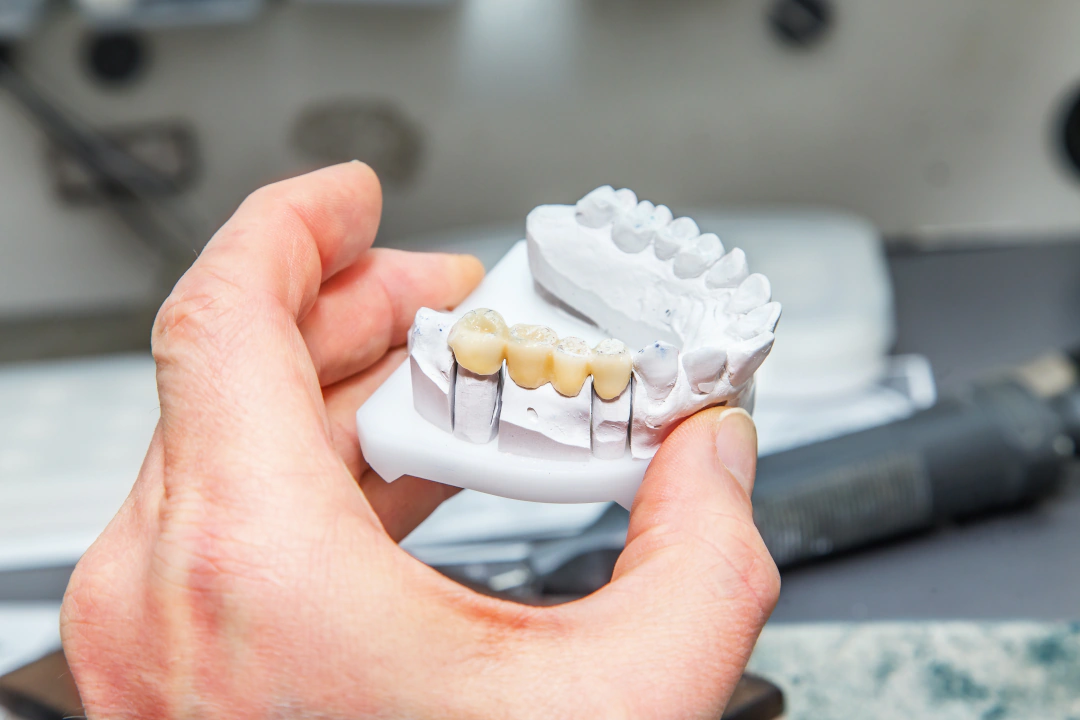
A traditional dental bridge can replace a single missing tooth or, in some cases, several adjacent teeth.
Instead of placing an implant into the jawbone, a bridge uses neighboring teeth for support. Those teeth receive crowns that hold an artificial replacement tooth in the space between them.
A bridge has several advantages. There is no implant surgery, treatment is generally faster than implant treatment, and a bridge can provide a fixed replacement that doesn't need to be removed each day.
The tradeoff is that the neighboring teeth usually have to be prepared for crowns. If those teeth are completely healthy, removing tooth structure to support a bridge may be less desirable than replacing the missing tooth independently with an implant.
On the other hand, if the adjacent teeth already need crowns, a bridge may be a very practical solution.
Removable Partial Denture
When several teeth are missing, a removable partial denture may be an option.
A partial denture contains replacement teeth attached to a removable appliance that uses the remaining teeth for support. It can replace several missing teeth without requiring an individual implant for each space.
Partial dentures are generally less expensive than replacing multiple teeth with implants and do not require implant surgery.
Because they're removable, however, they don't feel exactly like natural teeth or a fixed bridge. They also require periodic adjustment and may eventually need to be replaced as the mouth changes.
Full Dentures
If all or nearly all of the teeth in an arch need to be replaced and implants aren't possible, traditional complete dentures remain an option.
Dentures restore the appearance of missing teeth and allow patients to chew a much wider range of foods than they could without teeth.
They do have limitations. Traditional dentures rest on the gums rather than being anchored into the jawbone, so they can move during eating or speaking. The jawbone can also continue changing after teeth are lost, which means dentures may need adjustments, relining, or replacement over time.
Still, a properly made and properly fitted denture can provide meaningful improvement in function and appearance for someone who cannot receive implants.
Leaving the Space Empty
Another option is to do nothing, but whether that's reasonable depends on which tooth is missing.
Not every missing tooth absolutely has to be replaced. In some situations, particularly toward the back of the mouth, your dentist may determine that leaving the space alone is acceptable.
In other situations, an untreated space can create problems.
Nearby teeth may gradually shift or tilt into the opening. The opposing tooth can move farther into the space because it no longer has a tooth to bite against. Missing teeth can also change how chewing forces are distributed across the remaining teeth.
Before deciding not to replace a tooth, it's worth discussing the long-term consequences with your dentist.
Should You Get a Second Opinion If You've Been Told You Can't Get Implants?
It can be worthwhile, particularly if you were told that implants aren't possible because you don't have enough bone.
Dental implant treatment has changed considerably over the years, and bone grafting can make implant placement possible in situations where there initially isn't enough bone.
That doesn't mean another dentist will necessarily give you a different answer. Severe bone loss, health concerns, anatomy, or other factors may genuinely make another treatment a better choice.
But "you don't have enough bone" should lead to another question:
Can anything be done about it?
A complete implant evaluation can answer that question.
The Best Tooth Replacement Is the One That Works for You
Dental implants are often an excellent way to replace missing teeth, but dentistry doesn't have a single solution that works for everyone.
If you aren't currently a candidate for an implant, treatment may be able to address the reason. Bone grafting may improve inadequate bone support. Periodontal treatment can improve gum health. Other health or lifestyle factors may also be manageable.
And if an implant truly isn't the right choice, bridges, partial dentures, and complete dentures remain effective ways to replace missing teeth.
At First Dental Center in Tucson, we can evaluate your teeth, gums, jawbone, and overall oral health and explain which options are realistic for you. Our goal isn't simply to recommend an implant. It's to find an appropriate way to restore your smile and your ability to chew comfortably.
If you've lost a tooth, need an extraction, or have previously been told you aren't a candidate for dental implants, contact First Dental Center to schedule an evaluation and discuss your tooth replacement options.